News
-
![COSSBA Update for April]() COSSBA
COSSBACOSSBA Update for April
New UBA webinar series starts April 17; Registration opens for Advocacy Conference.Read more -
![Nominations for Holly Jack Outstanding Service Award Now Being Accepted]() News
NewsNominations for Holly Jack Outstanding Service Award Now Being Accepted
IASB honors the dedication and service provided by administrative professionals who assist boards of education.Read more -
![Resources to Support and Celebrate School Board Members’ First Year]() New-Board-Members
New-Board-MembersResources to Support and Celebrate School Board Members’ First Year
IASB supports districts with the ongoing work of orienting new members.Read more -
![IASB Invites Members to Answer 2024 Survey]() News
NewsIASB Invites Members to Answer 2024 Survey
The Association invites members to prioritize public education topics in a 10-minute survey.Read more


Upcoming Events
-
24Apr 2024Apr 24, 2024
Advocacy Ambassador Mid-Month Mini 04/24/2024
IASB Advocacy Ambassadors are invited to attend the Mid-Month Mini.Details -
30Apr 2024Apr 30, 2024
Equity Starts at the Top 04/30/2024
Learn how Illinois school boards are driving their visions of equity and inclusion, and how they navigate challenges and still celebrate progress. IASB will share how the Association is prepared to assist members with workshops, webinars, and resources no matter where you are on your Equity Journey.Details -
23May 2024May 23, 2024
JAC 2024: A Guide to Registration 05/23/2024
Do you have questions regarding the Joint Annual Conference registration process? Let our team be your guide while sharing best practices to ensure a smooth registration. Whether you are an experienced roster manager or a first-timer, this webinar will equip you with knowledge and confidence for the June 3 opening day of registration, and beyond.Details







In-District Workshop: Equity - An Educational Imperative
IASB is a partner in your district’s equity journey. Through an interactive workshop, participants will gain a better understanding of the board’s role in creating an equitable school environment, learn a systemic approach to achieving educational equity, and gain confidence and skills to address racial and ethnic differences through an equity lens.
View Workshop
Equity Resources
Advocacy for School Board Members
As key participants in our educational system, board members serve as an essential local resource on educational issues. Involvement by school board members in both the state and national legislative process is imperative to shaping sound education policy.
View Advocacy Resources
 IASB Presents the Advocacy Issue
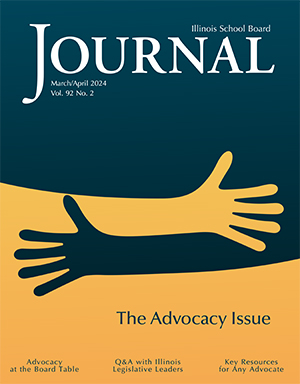
Hear from Illinois legislators and learn what IASB offers to further members’ advocacy efforts.